
How asset-based reporting with QR codes on dog bag dispensers improved accuracy, turnaround times and community satisfaction in Noosa Council.
Setting the Scene
Set along Queensland’s Sunshine Coast, Noosa Shire is known for its natural beauty, vibrant community, and strong commitment to sustainability. Home to around 56,000 residents, and over 10,000 registered dogs, Noosa’s public spaces are well-loved and well-used, particularly by local pet owners.
Maintaining the liveability and cleanliness of parks, beaches and walkways is a key part of council’s day-to-day fcous. And while it might seem like a small detail, keeping dog bag dispensers stocked and working matters; for amenity, health, and resident satisfaction.
Despite its importance, the legacy system for reporting issues with dog dispensers made it harder than it needed to be, creating service friction for residents and council teams alike.
The Challenge: Mystery Reports and Missed Refills
Without a simple way to report damaged or empty dispensers, residents had to navigate council’s broad digital and analogue channels, a process prone to location errors and incorrect request types.
The reporting process wasn’t keeping up. As David Graham, ERP Business Analyst at Noosa Council shared:
“People would go into our request system and manually input the details… but some of the request types were not right.”
This created low quality requests, frustrated users, and made it harder for teams to respond quickly or measure service outcomes.
At the same time, Noosa’s CX and IT teams were building a new partnership through their shared customer experience program, and were looking for ways to improve speed, customer experience, and accuracy.
The Breakthrough: Scan, Send, Solve
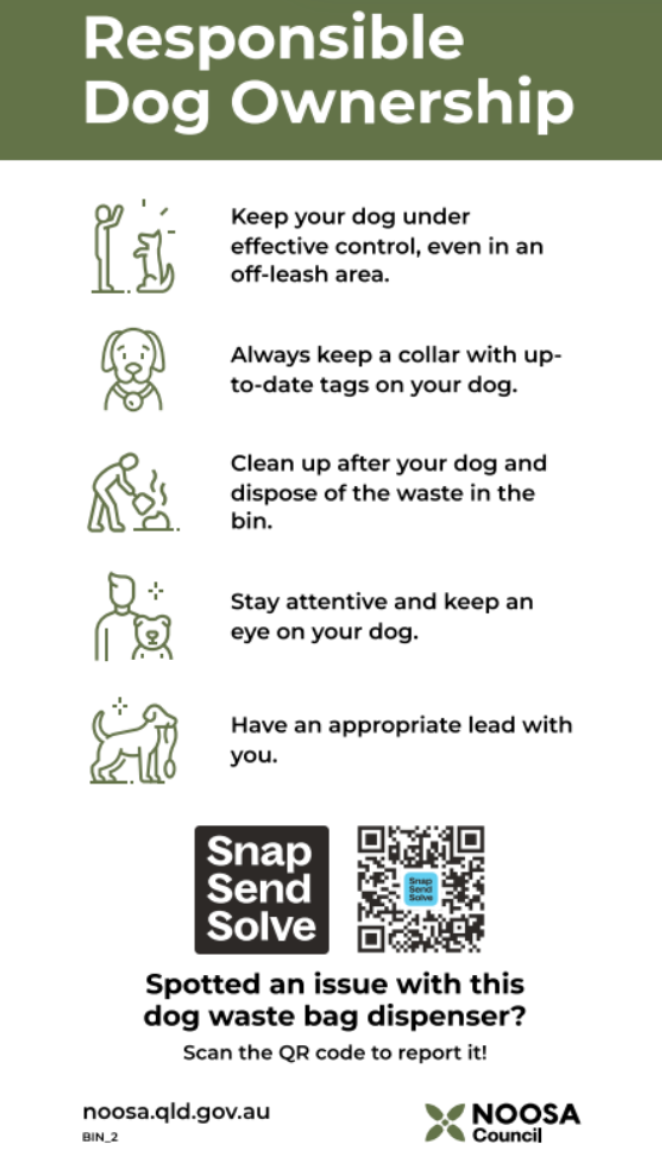
Partnering with Snap Send Solve, Noosa Council introduced a simple but powerful improvement: asset-based reporting with QR codes on every dog bag dispenser.
“We posted 132 QR codes on the dog bins throughout the council to make it easier for people to actually log the issue.”
Each code was tied to a specific asset, including the type of asset and its exact location, eliminating errors and speeding up resolution. The rollout itself became a team effort, bikes, sweat, and stickers included.
“That was probably the biggest challenge, we were all out on our bikes one summer, sweating through the humidity to get these stickers put on.”
Once live, the impact was immediate. Residents found it easier to report. Staff had clearer data and the project added another success to the ongoing collaboration between ICT and CX.
“We use that working group and the relationship between ICT and CX to look at what we're doing, how we're doing it, and where we can improve.”
The Results: Faster Fixes, Happier Residents
The new asset-based reporting system significantly improved request data quality, response times, and supported smarter resource planning and Customer Service KPI attainment.
- Faster issue resolution: Asset-based QR Code reports achieved a 94% speed-to-solve rating for Noosa Council, compared with 84% for standard reports. By linking each report directly to the correct asset, teams immediately know where the issue is, what it is, and what needs fixing, reducing common user errors such as selecting the wrong address or incident type.
- Higher customer satisfaction: While Noosa’s standard reports averaged 74% satisfaction, QR Code reports achieved 90%, demonstrating the impact of precise, error-free reporting on user experience.
- Snap Send Solve data shows that asset-based reports are 37% faster to complete for first-time reporters. With key data already in hand, QR codes reduce input complexity and shorten Solver triage time, an accuracy benefit that will increase as adoption grows.
- Snap Send Solve usage in Noosa Council increased 49% from 2023 to 2024, driven by the introduction of QR codes and broader app adoption, indicating growing community awareness and stronger engagement with Council.
“We’re already seeing great improvements.”

What’s Next: Scaling the Scan
Noosa is now exploring QR code reporting across more public assets, bringing the same speed, simplicity, and satisfaction to other high-touch community services.
“We’ll keep capitalising on this and growing it.”
The project has strengthened internal partnerships and deepened Noosa’s focus on the voice of the customer.
All figures and results stated are based on internal Snap Send Solve data covering the period from 2024 to 2025.

Stay in the loop with insights that matter
Sign up for exclusive research, industry insights, and updates tailored for Solvers on the Snap Send Solve platform.

.png)