Setting the Scene
As one of the world’s most livable cities, the City of Melbourne manages a high volume of foot traffic, with approximately 900,000 visitors entering the CBD daily for work, travel, and events. For the Council, maintaining the city's presentation is not just about aesthetics; it is a critical component of public trust.
According to Gavin Josef, the City of Melbourne’s Manager of Customer Contact Operations, cleanliness, safety, and amenity are "hygiene factors" that serve as the baseline for the community’s trust in the Council’s stewardship of the city.
"One of the key challenges of government generally is around building trust. And these are the sorts of things that erode trust. If you're not able to deliver on core services or core expectations of a community... how can they trust you with your big visionary pieces, you know, like a 2050 vision?"
The Complexity Trap
Prior to integrating fully with Snap Send Solve, the City of Melbourne relied on a web-based reporting facility. While the system was robust, it was overly complex for customers. The web forms were designed to be "super granular" to ensure reports went to the right teams, but this shifted the administrative burden onto the resident.
"We built it into such a level of complexity... It sort of forced the customer to answer a lot of questions to get down to the direct appropriate routing... Which is placing too much load on the customer. So not a good customer experience. Frustrating, time consuming."
The internal process also required significant manual intervention. Reports submitted via their other channels, like Snap Send Solve or email, often required a triage point; a staff member had to review the case before it could be assigned to a contractor - leading to delays on service delivery.
The Priority
The City of Melbourne chose graffiti as the primary incident type to launch their full integration. This decision was driven by high report volumes and the Council’s "Clean City Initiative." There is a strong correlation between the swift removal of graffiti and the prevention of further vandalism.
"If we get it done and get it clean quickly... It reduces the likelihood that it will reappear or proliferate. So I think that's the best outcome from a customer point of view."
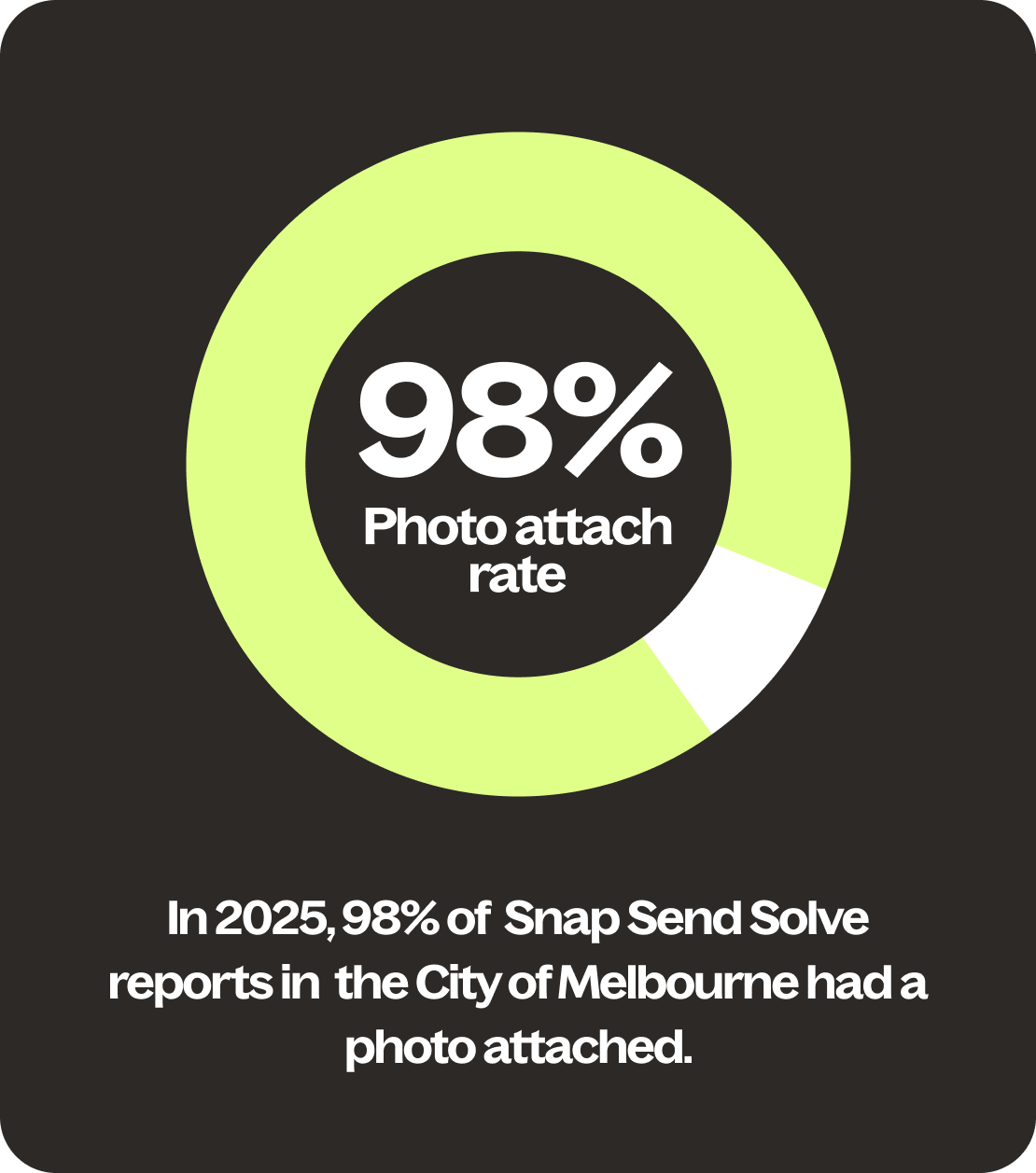
With 98% of reports arriving with photos, the City of Melbourne gains immediate visibility into issues without the need for an initial site visit. The system uses image metadata to pinpoint exact locations, while the visual evidence allows staff to instantly assess the scale and severity of graffiti. This ensures offensive content is prioritised and the correct resources are dispatched immediately, significantly reducing resolution times.
A Mobile-First Customer Experience
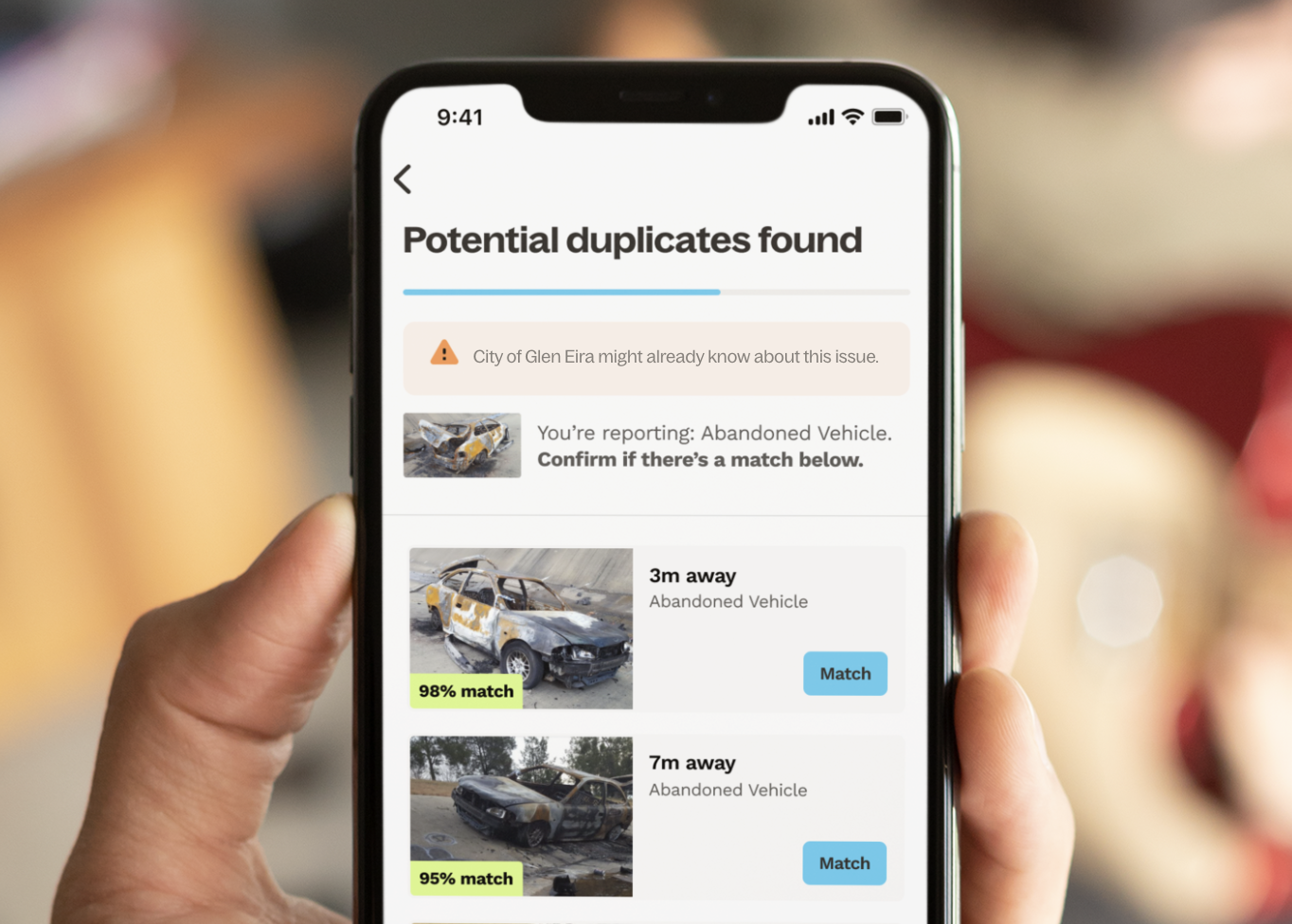
"The user experience is just far superior... Everyone's got one of these [phones] and we're taking photos all the time. Features like AI enabled report suggestions and potential report duplication surfacing take away complexity from customers and effort from contractors."
The Council recognised that to improve community trust and operational efficiency, they needed a platform that offered a superior User Experience and removed friction for the reporter. Snap Send Solve’s mobile-first approach and intelligent features offered a flexibility that the Council’s internal web forms could not match.
"No matter where the customer is, they shouldn't have to think, 'I'm in Melbourne, so I need to use this specific form.' That is a level of frictionless user experience that we wouldn't have been able to build on our own."
The Automated Workflow: Driven by Quality Data
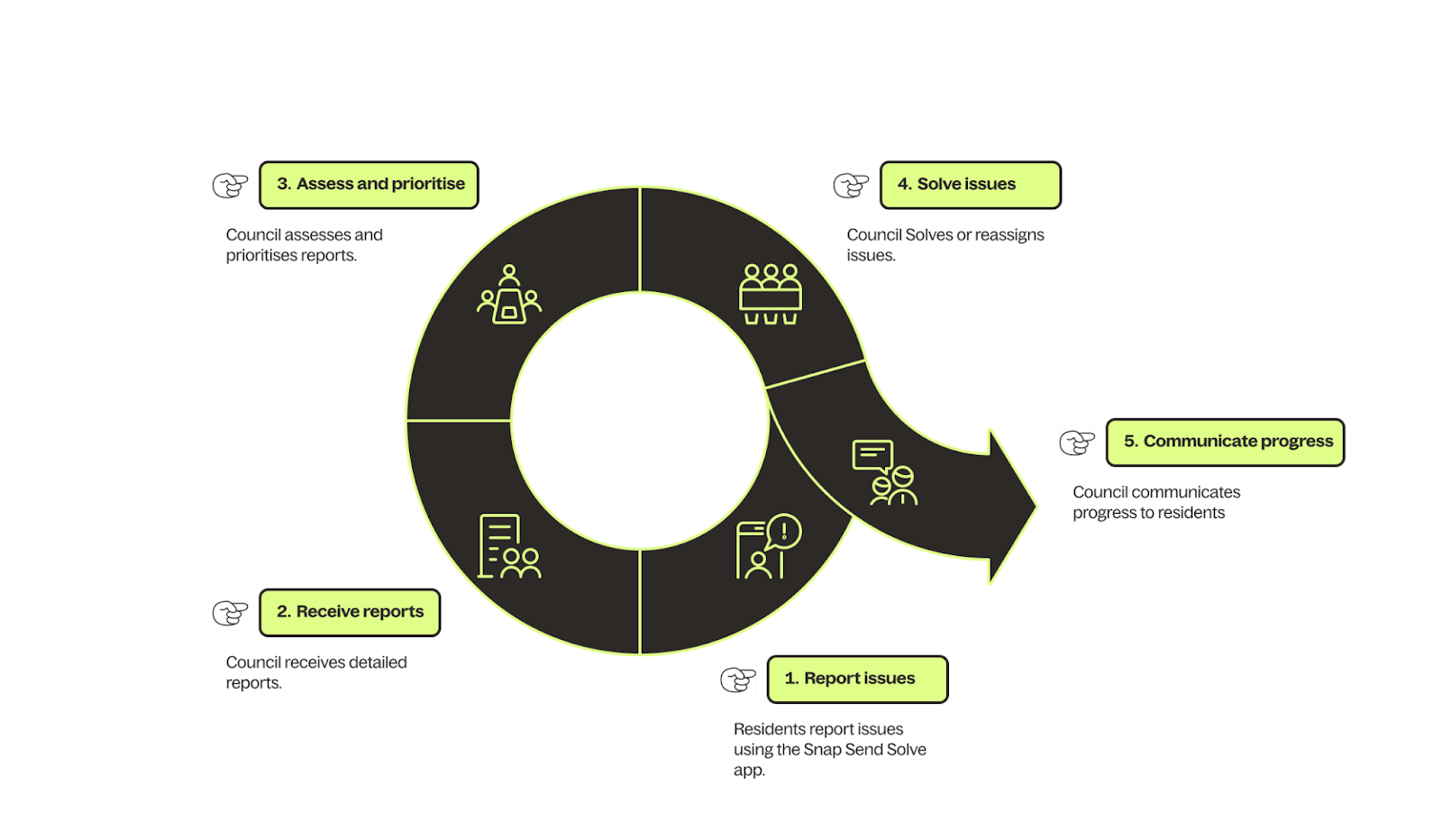
The integration has transformed the workflow from a manual triage system to a fully automated pipeline, contingent on the quality of the incoming data. By leveraging high photo-attach rates, the system uses embedded metadata to bypass traditional roadblocks.
- The Snap: A customer identifies graffiti and sends a report via the app. By attaching a photo, the app automatically extracts precise location coordinates from the metadata, ensuring the "where" is indisputable.
- The Automation: This high-fidelity report flows immediately into the City of Melbourne’s CRM. Because the data is verified by the image and GPS tag, it requires no manual verification or "clean up" by staff.
- The Action: The system instantly creates an internal case and generates a work order for the specific contractor responsible for that asset, closing the gap between sighting and solution.
"It's an instant process... effectively, we've removed manual effort to get the report from the customer to the contractor who's going to actually go out and clean it."
The Impact
Since streamlining the graffiti reporting process with Snap Send Solve, the City of Melbourne has seen immediate improvements across Customer Satisfaction (CSAT), operational efficiency, and contractor workflows.
- Customer satisfaction scores increased by 17% The shift to a seamless reporting experience has resulted in a significant jump in customer satisfaction scores.
"CSAT score has gone from 75 to 88, which is, I guess, probably the key number that I think reflects customer sentiment towards the change."
One City of Melbourne customer said, ‘Fast, efficient, nice to know a council that truly cares for their city & appreciates the reports from public & acts on it straight away.’
- Issue resolution times cut in half The removal of manual handling and improved data quality has had a drastic impact on turnaround times. Since implementation, the City of Melbourne has halved the time it takes to resolve graffiti issues.
- 30 hours of staff time per month saved By removing the manual triage step, the Council saves approximately 6 minutes of handling time per report. In a single month (December), this amounted to over 30 hours of saved staff time.
"It effectively equates to 31 hours of recoup time a month. So it's probably a day a week, let's say... We can absorb those savings quite quickly into our operation."
- Duplicate Detection Snap Send Solve’s duplicate detection feature has prevented unnecessary contractor call-outs for issues that have already been reported.
"Close to 5% have been confirmed by customers as a duplicate... It has also reduced that load on our contractor... We're not sending the person out to go to a location that they've already been to."
- Contractor Feedback
"We've had a really good response from our chief contractor as to the fact that they're getting the right things, they're getting them real time as they're created, and they can take the next step faster."
Data presented is based on the City of Melbourne's initial month of implementing the Snap Send Solve Enterprise offering (December 2025).
Scaling the Success
Following the success of the graffiti integration, the City of Melbourne plans to expand the partnership. The goal is to expand the Snap Send Solve reporting experience to illegally dumped rubbish, and explore other services that could follow.
"Our goal is to fully benefit from the Snap Send Solve reporting experience within the city... If there's an issue, something that needs to be done in the public domain, you report it simply via Snap Send Solve."


Stay in the loop with insights that matter
Sign up for exclusive research, industry insights, and updates tailored for Solvers on the Snap Send Solve platform.