Meet Molly, our amazing Marketing Coordinator! She's super creative and dedicated, whether she's handling Snapper comms or walking her dog, Candy. Molly loves Snapping e-scooters to help create a more accessible city for everyone.

Ever noticed how a single overgrown hedge, a cracked footpath, or a poorly placed wheelie bin can completely block a walkway? For members of the low vision and blindness community navigating our streets, these everyday obstacles are more than just a minor inconvenience. They can be significant safety hazards that disrupt daily independence.
October is Vision Awareness Month, a time dedicated to raising awareness and supporting the low vision and blindness community. Keeping our shared spaces walking-friendly is a team effort. Whether you’re out on your morning stroll, heading to the shops, or walking your own four-legged friend, you can play a part in creating accessible communities for everyone.
When shared pathways are clear and well-maintained, everyone wins.
By keeping an eye out for these issues, you can help make sure our footpaths remain safe and navigable for the low vision and blindness community.
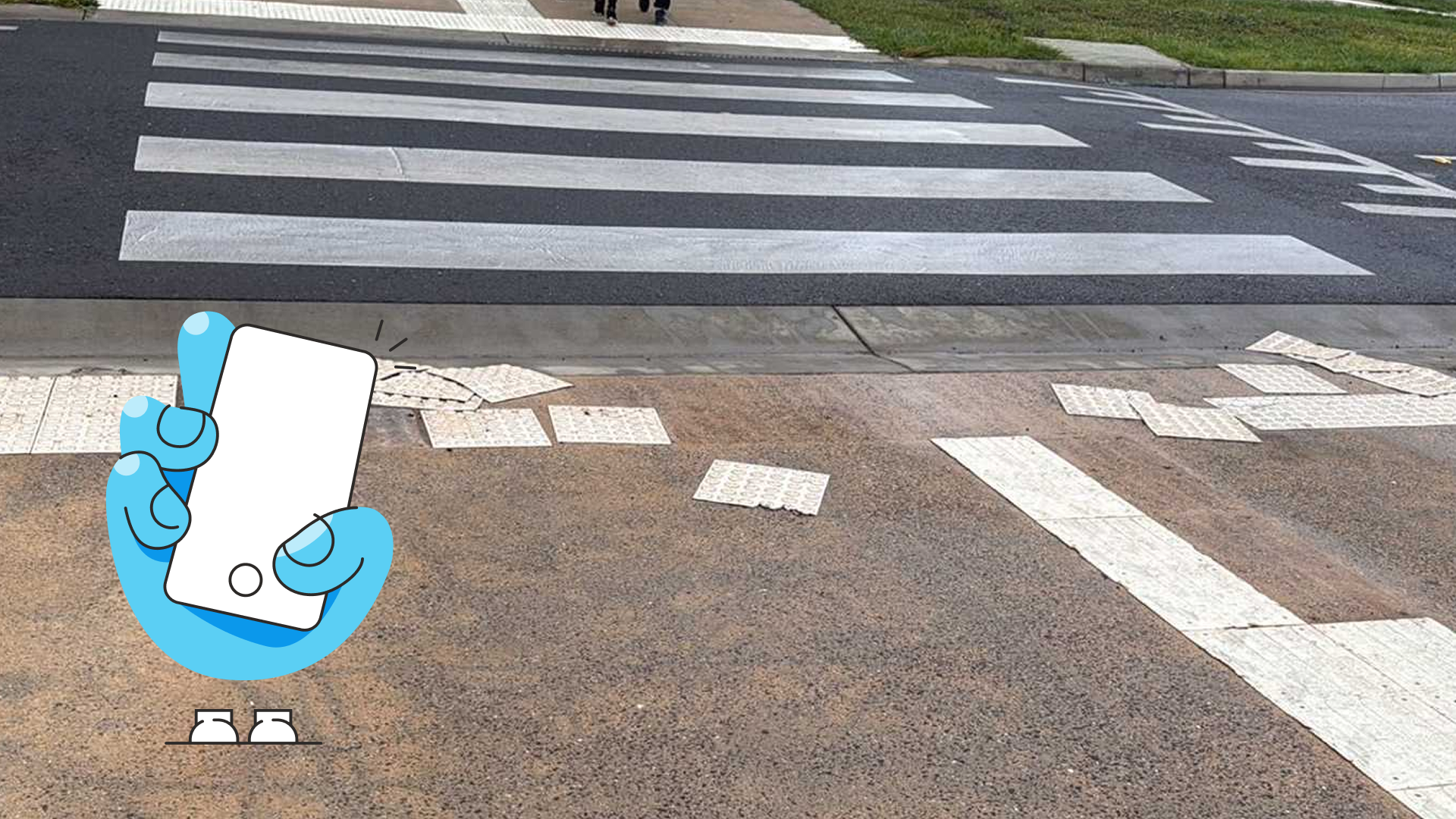
This encompasses everything from cracked, uneven, or severely broken pavements that disrupt a smooth walking surface. Uneven ground creates significant tripping risks and can damage mobility aids, making independent travel stressful. For the low vision and blindness community, a level path is crucial for navigating safely without unexpected, jarring drops.
Think unkempt hedges, low-hanging tree branches, or bushes protruding directly across public walkways. Overgrown plants physically block paths, forcing pedestrians onto nature strips or busy roads. For those a part of the low vision and blindness community, unexpected branches can cause painful collisions or hide oncoming obstacles, making clear pathways essential this October.
You’ve probably seen them left lying flat across the pavement or parked haphazardly across pedestrian walkways. They create sudden, solid roadblocks that entirely block footpaths, creating major navigation barriers for cane users and Guide Dogs trying to find a safe way through. Snapping these micro-mobility obstructions lets local providers know where they’re in need of collection.
A street light doesn't need to be completely dead to be a hazard; we also mean those dimming, flickering, or faulty public lamps that turn your local pathways into a guessing game. It’s a common misconception that everyone in the low vision and blindness community experiences total darkness; in reality, many individuals rely on remaining vision, using distinct light and shadows to map out obstacles or familiar paths. When a street light fails, it removes these vital visual cues, making a familiar evening stroll feel incredibly disorienting.
Spotting an accessibility hazard is the first step, but flagging it for the wider community is where the real impact happens. If you spot an accessibility issue on your daily route, you can use Snap Send Solve to send off a report.
This Vision Awareness Month, we’re proud to be working alongside Guide Dogs Queensland to highlight these vital accessibility issues. Together, we can work towards making our streets and suburbs cleaner, safer, and more inclusive for all.
Ready to make a difference on your next walk? Keep your eyes peeled, snap a photo of any accessibility hazards you see, and help us clear the way this October.
Download Snap Send Solve: https://onelink.to/guidedogs
Select this link to check out our accessible how to Snap guide.